









Few active concepts in modern anti-aging and skin longevity research generate as much excitement—and as much confusion—as stem cell technology. Across the global beauty landscape, the phrase “Stem Cell Technology” covers vastly different scientific realities: biotechnologically cultivated plant stem cell extracts (derived from Swiss apple, edelweiss, or alpine rose cultures), human stem cell derivatives (“conditioned media” from adipose or umbilical tissue), animal extracts, and nanometric exosomes. How do these technologies actually behave on human skin? Which ones are legally permitted in Europe? And how do botanical stem cells compare with exosomes, peptides, and retinoids? This deep-dive guide separates clinical facts from marketing hype.
Key Takeaways
- Zero Living Cells in the Jar: Skincare never contains live stem cells; instead, it utilizes purified metabolites, lipids, and epigenetic protective compounds extracted from controlled cell cultures.
- Botanical Stem Cells (Phyto Stem Cells): Totipotent plant cells grown in bioreactors (such as Uttwiler Spätlauber apple, edelweiss, and goji) are 100% vegan, EU-compliant, and shield your skin’s own stem cells from UV-induced senescence.
- Human & Animal Derivatives: Derived from cultured human fat/bone marrow media or animal tissues. Human-derived ingredients are strictly banned under EU Cosmetics Regulation (EC) No 1223/2009.
- Stem Cells vs. Exosomes: While stem cell extracts provide broad antioxidant and epigenetic defense, exosomes (30–150 nm) are specialized lipid nanovesicles engineered for direct cell-to-cell signaling.
- Barrier-First Tolerance: Unlike harsh exfoliating acids or high-strength retinoids, plant stem cell and exosome formulas reinforce the moisture barrier with zero irritation.
Contents: 1. Biology of Skin Stem Cells · 2. The 4 Technologies Explained · 3. Bioreactor Extraction · 4. Technology Comparison · 5. Stem Cells vs. Exosomes & Retinol · 6. EU Regulations & Safety · 7. Daily Routine Guide · FAQ · References
1. Why Skin Ages: Protecting Your Epidermal Stem Cells
Your outer skin layer (epidermis) completely renews itself every 28 to 40 days. This continuous turnover is powered by your own epidermal stem cells nestled deep within the basal layer. Throughout life, they divide to generate fresh keratinocytes that migrate upward to maintain a resilient, hydrated barrier.
Over decades, cumulative exposure to UV radiation, urban pollution, free radicals, and silent micro-inflammation (inflamm-aging) slows down their regenerative pace. The epidermis thins, moisture escapes faster, and fine lines deepen. Botanical stem cell skincare is designed specifically to defend and prolong the functional vitality of these native cells.
2. The 4 Stem Cell Technologies in Modern Skincare
- Botanical Stem Cell Technology (Phyto Stem Cells): Undifferentiated stem cells from resilient flora—such as the rare Swiss Uttwiler Spätlauber apple, alpine rose, edelweiss, or argan—are cultivated in sterile bioreactors. Their extracts deliver concentrated polyphenols and epigenetic factors that protect human skin stem cells against oxidative stress.
- Human Stem Cell Derivatives (“Conditioned Media” / Growth Factors): Used in certain US and Asian clinical lines, these formulas incorporate nutrient broth in which human adipose-derived stem cells (ADSC) or fibroblasts were previously grown. While filtered of live cells, they contain human cytokines and growth factors—and are legally prohibited in EU cosmetics.
- Animal Stem Cell & Placenta Extracts: Older formulations occasionally utilized ovine placenta or animal tissue cultures. Ethical concerns, non-vegan status, and allergen/contamination risks have rendered this approach largely obsolete in clean luxury skincare.
- Cell-Free Lipid Nanovesicles (Botanical Exosomes): The newest evolution in cellular biotechnology isolates the microscopic 30–150 nm phospholipid spheres (exosomes) secreted by vital plant cells to deliver targeted renewal cues across skin cells.
3. How Plant Stem Cells Are Cultivated: Totipotency & Bioreactors
Unlike human adult stem cells, which are locked into specific tissue lineages, plant cells possess totipotency—every single cell retains the complete genetic blueprint to regenerate an entire organism or synthesize potent protective molecules under extreme stress.
- Step 1 — Callus Induction: A tiny sterile plant cutting is lightly incised, prompting the plant to form unorganized, rapidly dividing stem cell tissue known as callus.
- Step 2 — Bioreactor Cultivation: These pure cells multiply inside closed liquid bioreactors free from pesticides, heavy metals, or seasonal climate fluctuations.
- Step 3 — High-Pressure Homogenization: Cell walls are gently ruptured to release intracellular amino acids, polyphenols, lipids, and epigenetic factors.
- Step 4 — Liposomal Encapsulation: Actives are enclosed inside skin-compatible liposomes so they integrate smoothly with the stratum corneum.
Sustainability Milestone: Producing tons of active extract requires just milligrams of initial plant tissue—preserving endangered alpine species like edelweiss while reducing water and land consumption by over 90%.
4. Side-by-Side Comparison: Plant vs. Human & Animal Stem Cells
| Criterion | Plant Stem Cell Technology | Human Stem Cell Derivatives | Animal Stem Cell Extracts |
|---|---|---|---|
| Biological Source | Bioreactor callus cultures (apple, edelweiss, alpine rose) | Cultured human adipose, bone marrow, or umbilical cells | Animal cell cultures or placental tissue (e.g., ovine) |
| Mechanism in Skin | Protects native epidermal stem cells from UV & senescence | Stimulates receptors via human growth factors & cytokines | Surface protein and nutrient conditioning |
| EU Legal Status | 100% Approved & safety-assessed under EU law | Strictly Prohibited (EU Regulation 1223/2009, Annex II) | Subject to strict animal byproduct restrictions |
| Ethics & Sustainability | 100% vegan, cruelty-free, ultra-low water footprint | Donor tissue ethics, non-vegan | Non-vegan, animal welfare concerns |
| Purity & Stability | Standardized lab purity with zero biological contaminants | Fragile growth factors prone to batch variability | Higher risk of allergic reactions or impurities |
5. Plant Stem Cells vs. Exosomes, Peptides & Retinol
| Active Class | Primary Role in Skin | Key Strengths & Considerations |
|---|---|---|
| Plant Stem Cells | Cellular protection & longevity of native skin stem cells | Rich in antioxidants & epigenetic factors; ideal defense against photoaging |
| Botanical Exosomes | Active cell-to-cell signaling (Cell-Signaling) | Nanometric lipid vesicles (30–150 nm) deliver targeted renewal messages into the barrier |
| Signal & Copper Peptides | Messengers & building blocks for collagen and elastin | Visibly firms and smooths fine lines without irritation |
| Retinol / Retinal | Accelerated turnover via nuclear receptor binding | Gold standard for wrinkles & blemishes, but can trigger dryness, peeling, and sun sensitivity |
Synergistic Advantage: Plant stem cells and botanical exosomes complement each other seamlessly—stem cell extracts fortify cellular resilience against oxidative stress, while exosomes coordinate calm, barrier-friendly regeneration.
6. EU Cosmetics Regulation: Why Sourcing Transparency Matters
For shoppers across Germany, Austria, Switzerland, and the wider EU, Annex II of Regulation (EC) No 1223/2009 explicitly prohibits any cells, tissues, or derivatives of human origin in cosmetic products. Imported serums advertising “Human Stem Cell Conditioned Media” originate from non-EU jurisdictions with different regulatory frameworks. European luxury formulations rely on clean, reproducible botanical stem cell and exosome biotechnology.
7. How to Build a Daily Stem Cell & Exosome Longevity Routine
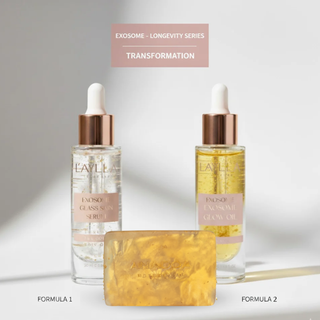
- Gentle Cleansing with Stem Cell Technology: Begin with Golden Soap with Stem Cell Technology to cleanse impurities smoothly without stripping essential barrier lipids.
- Deep Hydration & Cellular Activation: Press 2–3 drops of Exosome Glass Skin Serum (with botanical exosomes, hyaluronic acid, panthenol, and 24K gold) onto damp skin morning and night.
- Targeted Tone & Dark Spot Correction: Layer Exosome Brightening Serum with niacinamide, arbutin, exosomes, and Swiss stone pine to visibly even skin tone.
- Revitalizing Eye Care: Gently tap Exosome Eye Care with plant exosomes, caffeine, and niacinamide around the orbital contour.
- Biomimetic Lipid Lock: Seal overnight moisture with 2 drops of L’AYLLA Exosome Glow Oil blending goji exosomes, jojoba, macadamia, and centella asiatica.
- Daily Broad-Spectrum UV Shield: Finish every morning routine with Exosome Day Care + SPF 30 to defend epidermal stem cells against UV photoaging.
Complete Starter Ritual: Explore the coordinated L'AYLLA Exosome Set – Longevity Series with Golden Soap or browse our curated range at Kosmetik Club.
Frequently Asked Questions
What is the difference between plant stem cells and human stem cells in skincare?
Plant stem cell extracts are biotechnologically cultivated in bioreactors from resilient botanicals (such as Swiss Uttwiler Spätlauber apple, alpine rose, or edelweiss), are 100% vegan, and protect our own epidermal stem cells against oxidative stress. Human or animal stem cell derivatives, by contrast, are prohibited in EU cosmetics and raise ethical and regulatory concerns.
Do stem cell creams contain actual living cells?
No. Living cells cannot survive inside a cosmetic jar or penetrate an intact skin barrier. High-performance stem cell skincare instead relies on purified secondary metabolites, epigenetic protective factors, and liposome-encapsulated actives harvested from controlled plant cell cultures.
What is the difference between plant stem cells and exosomes?
Plant stem cell extracts deliver the full spectrum of protective cellular metabolites to defend skin stem cell vitality. Exosomes are nanometric phospholipid transport vesicles (30–150 nm) released by cells that act as biological couriers, transmitting targeted renewal signals directly between skin cells.
Are human or animal stem cells legal in European cosmetics?
No. Under Annex II of EU Cosmetics Regulation (EC) No 1223/2009, cells, tissues, or products of human origin are strictly banned in cosmetic products. Modern European clean-tech skincare relies exclusively on vegan botanical stem cell and exosome biotechnology.
How are botanical stem cells produced in a bioreactor?
A tiny sterile plant tissue sample is gently incised to trigger undifferentiated callus tissue composed of totipotent stem cells. These cells multiply inside closed bioreactors without pesticides or harvesting endangered alpine flora, cutting water use by over 90%.
Scientific References
- Schmid D, Schürch C, Blum P, Belser E, Zülli F. Plant Stem Cell Extract for Longevity of Skin and Hair. SOFW Journal. 2008;134(5):30–35.
- Trehan S, Michniak-Kohn B, Beri K. Plant stem cells in cosmetics: current trends and future directions. Future Science OA. 2017;3(4):FSO226.
- Aggarwal S, Sardana C, Oza M, et al. Plant stem cells and their applications in skin care and cosmeceuticals. Journal of Cosmetic Dermatology. 2020;19(11):2815–2824.
- Hajialiasgary Najafabadi A, Soheilifar MH, Masoudi-Khoram N. Exosomes in skin photoaging: biological functions and therapeutic opportunity. Cell Communication and Signaling. 2024;22:32.
- Regulation (EC) No 1223/2009 of the European Parliament and of the Council on cosmetic products (Annex II).
Disclaimer: This article is intended for educational purposes only and does not replace professional dermatological advice. Editorial Team: Kosmetik Club.